
The First Scenario Should Never Be the Only Scenario
Anchoring on an early option is the most expensive habit in development. How to keep credible alternatives alive until the evidence is in.
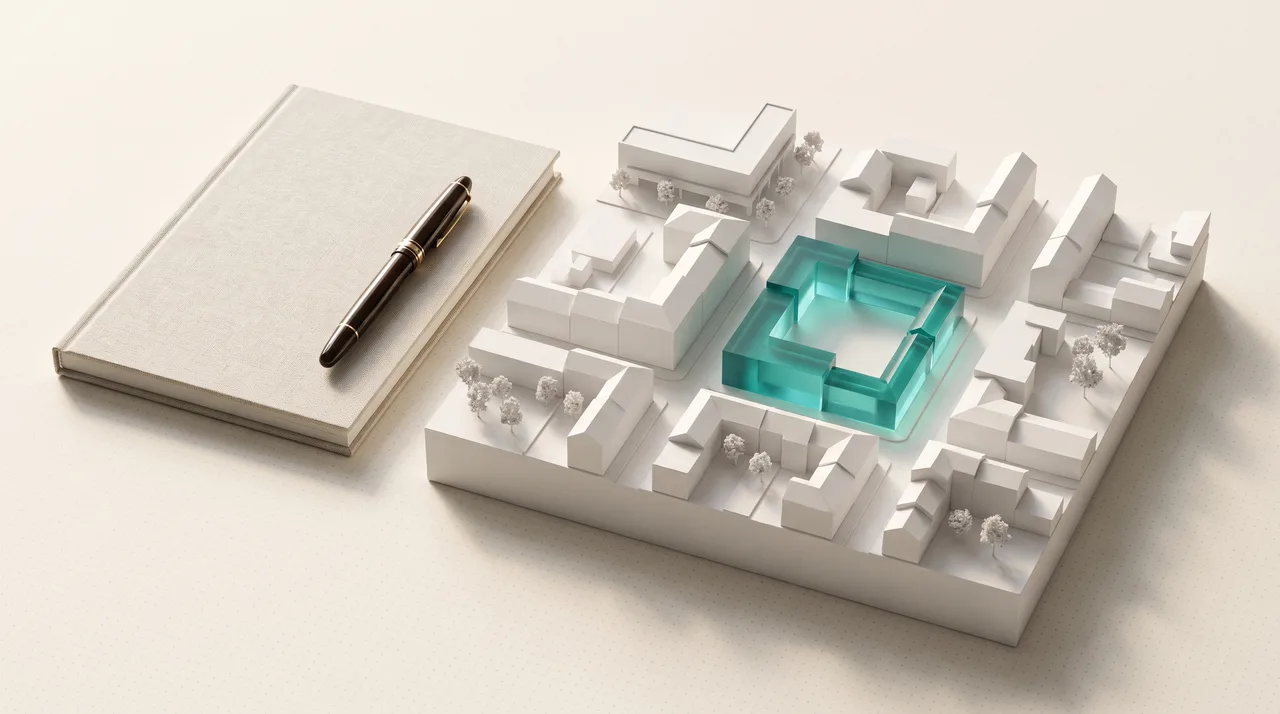
Every development starts with a picture. A landowner has a view of what the site could hold. An architect produces a sketch to win the appointment. A feasibility model is built around last year's program on a similar plot. Within weeks, that first picture has a model, a render and a number attached to it.
None of this is a mistake. Teams need something concrete to react to, and an early scenario is often a good one. The problem starts when the first scenario quietly becomes the only one: the reference against which everything else is measured, rather than one candidate among several.
01How Anchoring Takes Hold
Anchoring rarely looks like a decision. It looks like progress.
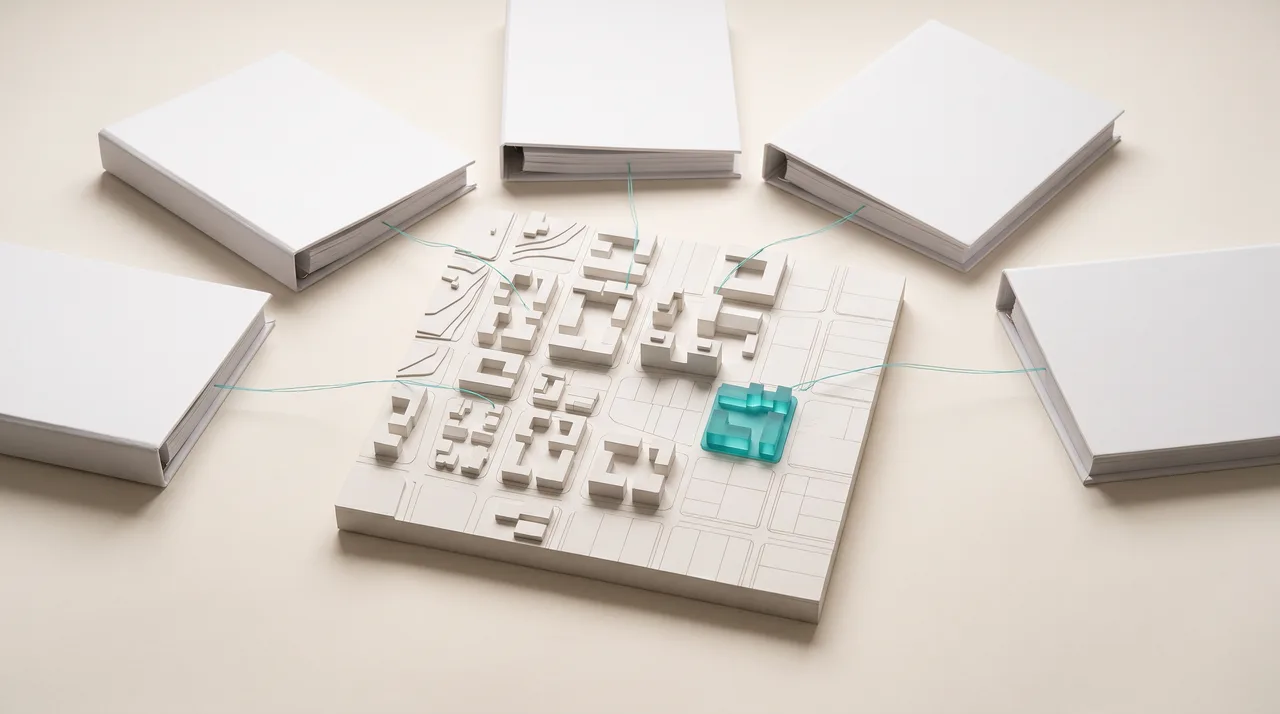
Once a scenario has a model, the next studies are scoped against it. The mobility consultant tests whether the road network can carry this density. The cost adviser prices this massing. The market study asks whether this unit mix will absorb. Each piece of work is competent, and each one makes the first scenario more detailed and more expensive to set aside.
Alternatives still appear, but as variations: two more floors, a different podium, a larger park. They are measured as deviations from the anchor, not as different answers to the question the land actually poses. By the time the evidence is complete, the question it answers has shifted from what is the best use of this site? to can this scheme be made to work?
02Why It Costs So Much
The cost of changing direction grows with every commitment made in the meantime. A land price is negotiated on an assumed density. Design fees are spent developing one massing. A pre-application conversation sets expectations with the authority. An investment paper describes a single scheme to a committee.
None of these commitments is irreversible, but each one makes reversal slower, more expensive and harder to explain. A better option discovered late is often an option that can no longer be taken. The cheapest moment to compare alternatives properly is before any of them has been paid for.
03What a Credible Alternative Looks Like
A comparison is only as good as the alternatives in it. A straw-man option, drawn to make the preferred scheme look reasonable, is worse than no alternative at all, because it gives a single-option decision the appearance of rigor.
Credible alternatives share four properties:
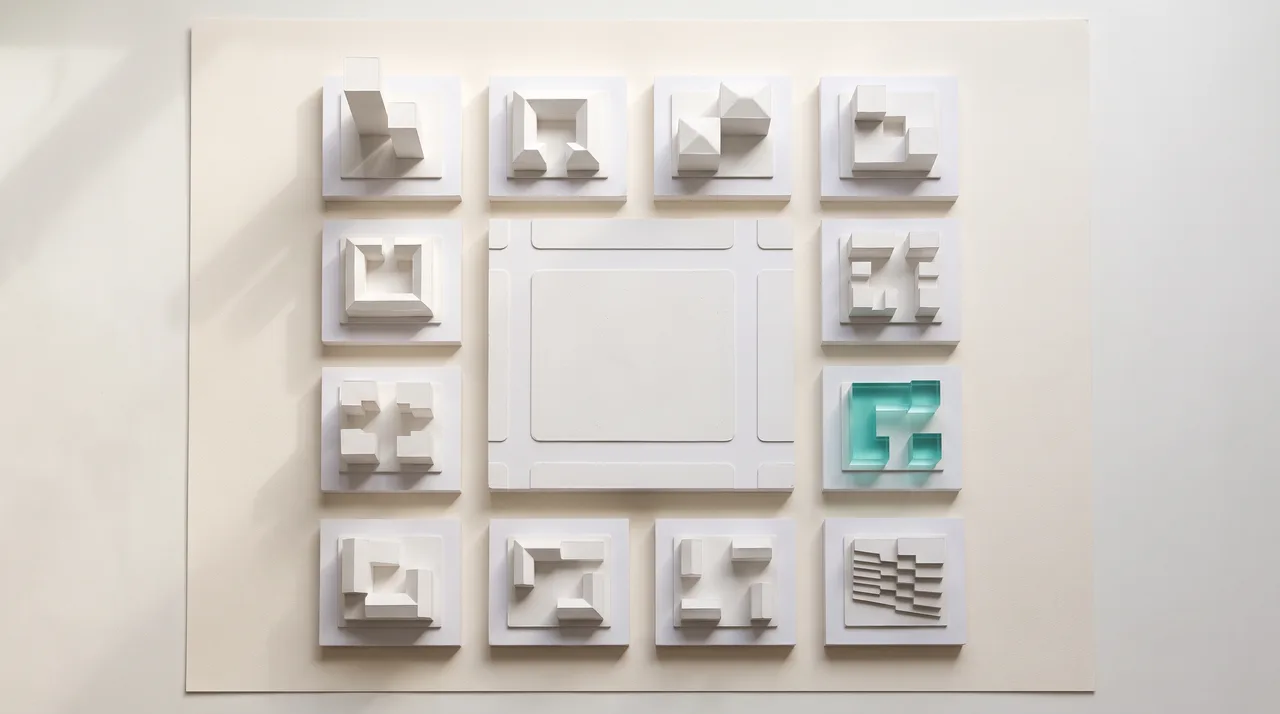
- A different priority, not a different drawing. Each scenario pursues a distinct objective, such as balanced growth, maximum yield or quality of place, and is named for it rather than for a predeclared winner.
- The same constraints. Every option is tested against the same zoning, access, environmental and infrastructure limits.
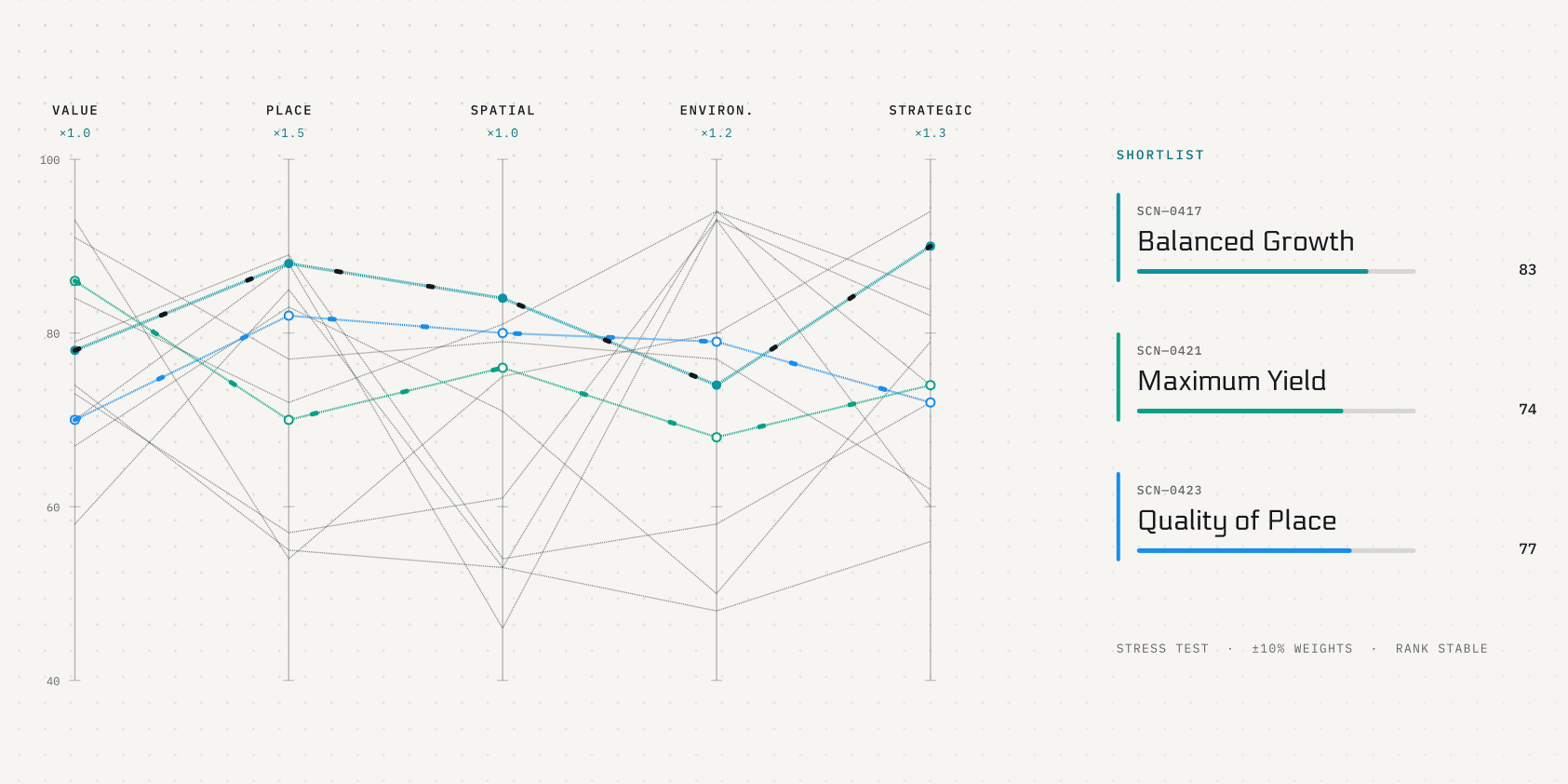
- The same evidence and criteria. Each is scored on the same metric groups, with the same weights, agreed before the results are known.
- The same depth. An alternative carried at sketch level cannot fairly compete with a scheme that has had six months of design.
04How to Keep Alternatives Alive
Keeping options open is not the same as postponing the decision. It is a discipline applied from the start:
- Frame the decision before the design. Agree what decision is being made, who owns it, and when the decision gate falls.
- Set the criteria first. Fix the metric groups and their weights before any scenario is scored, so the weighting cannot drift toward a favorite.
- Generate a spread, not a sequence. Develop several directions in parallel rather than one after another.
- Compare on one evidence base. Every option draws on the same site model, data and assumptions.
- Hold a shortlist to the gate. Carry the two or three options that survive scrutiny all the way to the decision.
- Record why the others were set aside. The reasons matter as much as the choice.
This is the work Hakken is built for: generating or importing scenarios, testing every one against the same constraints, and keeping the comparison explicit until the decision is recorded.
05More Options Is Not the Point
Generating hundreds of scenarios is easy. Deciding between them is not. A long list of unexamined options is as unhelpful as a single one, because nobody can hold it in mind or defend a choice from it.
The goal is not more options. The goal is a better decision: a short list of genuinely different directions, compared on the same basis, with the trade-offs visible before anything is committed. The first scenario may well turn out to be the right one. It should have to earn that position.